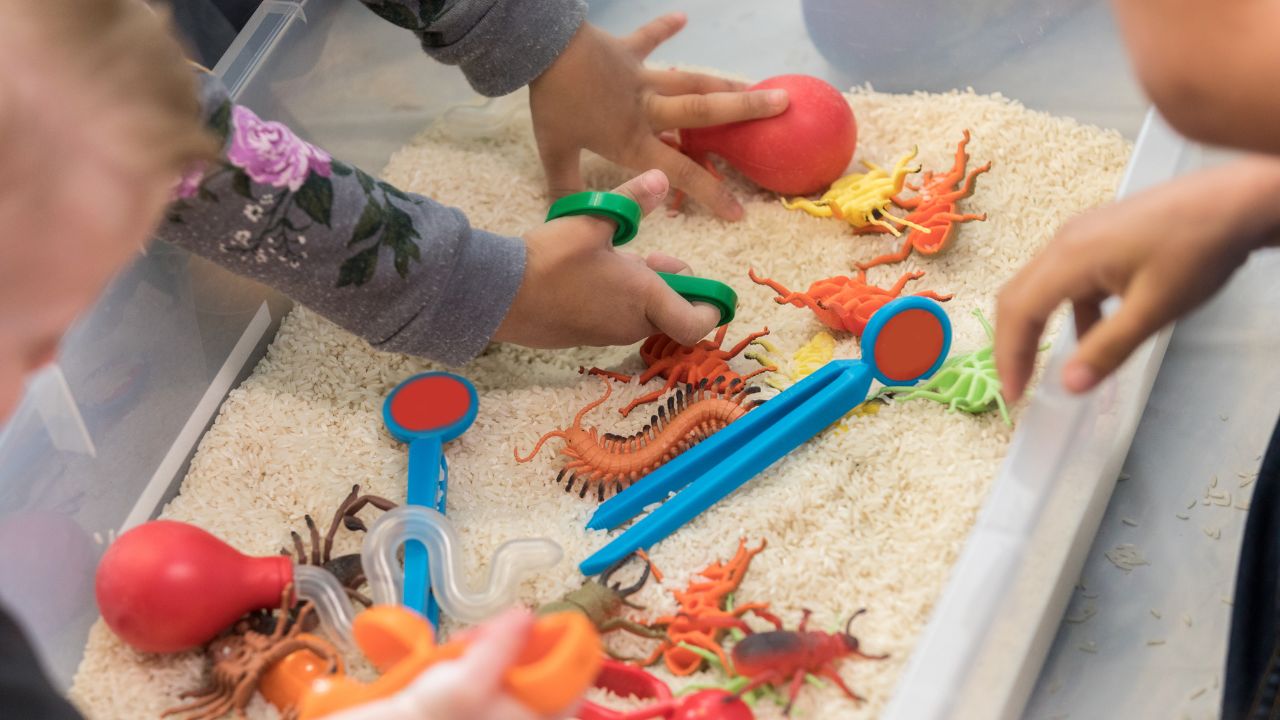

Sensory play gives children opportunities to explore different textures, sounds, movements and smells. Sand, finger paint, playdough and water are common examples. While many children enjoy these activities, others pull away, become upset or refuse to join in.
This does not mean your child is being difficult. Their response may be telling you that the activity feels uncomfortable, unpredictable or too demanding. Understanding why they are avoiding sensory play can help you respond with patience and find activities that feel safer.
1. The sensation feels overwhelming
Some children experience sensory input more intensely than others. Sticky paint, wet sand or the smell of playdough may feel unpleasant rather than fun. A child might refuse to touch the material, wipe their hands repeatedly or become distressed when something spills onto their clothes.
Noise and movement can also contribute. A busy playgroup with music, chatter and several activities happening at once may overwhelm a child before they even approach the sensory table.
Sensory sensitivities can occur for various reasons and do not automatically indicate a particular condition, like autism.
What parents can try
Begin with a texture your child already tolerates and let them control how they interact with it. They might use a spoon, a brush or a toy instead of touching it directly. Keep the activity short and allow them to stop without pressure. Gentle, repeated opportunities are usually more helpful than turning the activity into a test they must complete.
2. The activity feels unpredictable
Sensory play can be messy and difficult to control. Water splashes, slime changes shape and sand sticks to skin. Children who prefer familiar routines may feel unsure when they cannot predict what will happen next.
They may also worry about getting dirty, making a mistake or not knowing when the activity will finish. What appears to be refusal might be your child trying to create a sense of safety and control.
What parents can try
Explain and demonstrate the activity before asking your child to join. Show them where the materials will stay, how they can clean their hands and when the activity will end.
Offer simple choices, such as using dry rice or water, sitting or standing or watching before participating. If changes and transitions regularly cause distress, learning about positive behaviour support may help families understand how tailored strategies can support participation.
3. Sensory play places extra demands on the body
Sensory play involves more than touch. Scooping, pouring, squeezing and stirring require coordination, body awareness, hand strength and planning. A child may avoid playdough because manipulating it feels tiring or refuse a sand activity because using both hands together is difficult.
Low muscle tone, reduced fine motor strength or motor-planning challenges can make a seemingly simple activity require significant effort. Some children rush, withdraw or become frustrated because they cannot make their bodies do what they want.
What parents can try
Choose materials that are easier to control. Soft dough, large scoops and shallow containers can reduce the physical effort involved. Demonstrate one step at a time and focus on exploration rather than producing a finished result.
Notice whether similar difficulties occur during dressing, eating, drawing or playground activities. These observations may help a children’s occupational therapist understand the broader pattern.
When could occupational therapy services help?
Consider seeking guidance when sensory avoidance is persistent, causes significant distress or limits your child’s participation in play, self-care, learning or family routines.
A children’s occupational therapist can explore your child’s sensory responses alongside their movement, regulation, communication and everyday environment. If you are searching for an “OT near me”, look for a practitioner with paediatric experience who takes a gradual, child-centred approach.
Help your child explore at their own pace
Links to Life provides personalised occupational therapy services that support children’s participation and independence at home, at school and in the community. Complete our contact request form to receive an introductory call from our team, or explore our articles for families for practical information about children’s development and everyday support strategies.