

Children can behave differently at school than they do at home. Classrooms demand sustained attention, fine motor control, organisation and the ability to manage noise and transitions. This is why teachers may notice difficulties before parents do.
Here are five common signs teachers may notice that could suggest your child needs extra support, along with practical ways parents can respond.
1. Writing and fine motor tasks are difficult
Your child may use a fisted or unusual pencil grip, swap hands frequently or find handwriting tiring. Their work might be difficult to read, and they may avoid colouring, cutting or craft activities. Some children also complain of sore fingers when writing.
What parents can do
Ask the teacher for examples of your child’s work and whether the difficulty occurs across several activities. At home, notice how they use cutlery, fasten buttons and handle small objects. If the difficulty continues despite gentle support and practice, share what you’ve noticed with an OT so they can help explore what may be making these tasks harder.
2. Work is slow or regularly unfinished
A child may understand a lesson but still take much longer than their classmates to begin or complete tasks. They might need instructions repeated, demonstrated or broken into smaller steps.
Slow or unfinished work can relate to attention, motor planning, processing or difficulty organising a task. It should not automatically be viewed as laziness or a lack of effort.
What parents can do
Ask which tasks take the longest and what support has already been tried. Shorter instructions, visual prompts and planned movement breaks may make classroom and homework tasks more manageable.
3. Organisation is an ongoing struggle
Occasional mess is normal. However, regularly losing pages, damaging books, forgetting belongings or struggling to find materials may suggest that your child needs support with planning and organisation.
What parents can do
Use a simple picture checklist for packing and unpacking their school bag. Clearly labelled folders and consistent routines may also help. An OT can explore whether these challenges relate to attention, memory, coordination or the number of steps involved.
4. Movement or posture affects participation
Teachers may notice that your child appears less coordinated than their peers, avoids sports or becomes tired quickly during physical activities. Other signs include frequent fidgeting, difficulty staying seated or regularly sitting in a W position on the floor.
These behaviours are not necessarily a problem on their own. They may need attention if they affect your child’s comfort, safety or participation.
What parents can do
Avoid describing your child as clumsy. Instead, note which activities are difficult and whether balance, strength or coordination appears to be involved. Occupational therapy for children can assess how movement affects everyday school tasks.
5. Sensory input or transitions cause distress
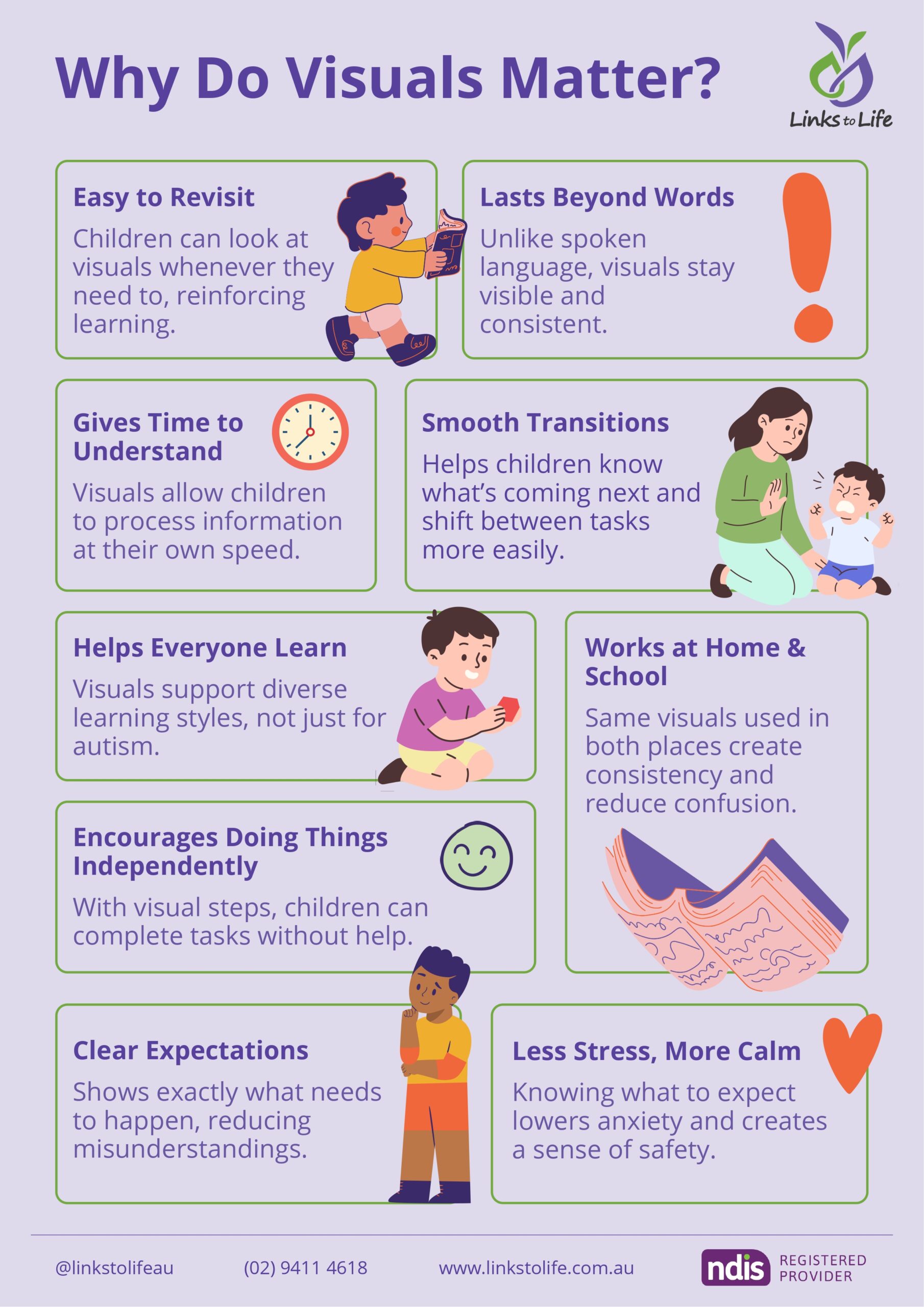
Busy classrooms can feel overwhelming. Your child might be highly sensitive to noise, avoid paint or glue, wipe their hands repeatedly during messy play or become distressed when routines change. Some children withdraw, while others have strong emotional reactions.
What parents can do
Record what happened before the distress, how your child responded and what helped them settle. Ask the teacher whether patterns occur during particular tasks or times of day.
When to consider an OT functional assessment
Consider seeking support when challenges persist, appear in more than one setting or affect learning, friendships, independence or family routines. When choosing an OT in Sydney, look for paediatric experience and a willingness to work with both your family and your child’s school. You can explore our occupational therapy services and learn more about Links to Life.
Speak with Links to Life about your child
Links to Life provides personalised, evidence-based support focused on practical skills for home, school and community life. If your child’s teacher has raised concerns, contact our team to discuss whether an OT functional assessment may be a helpful next step.